

 Popular Science Topic


Food safety is our top priority at Yum China. We have made a substantial investment to build an industry-leading, intelligent, digitalized food safety and quality management system. Utilizing Artificial Intelligence (AI), Internet of Things (IoT), and real-time data collection and analysis, we have established rigorous control measures across the value chain.
Yum China Holdings, Inc.
Goals
- Food safety and quality audit covers 100% of restaurants and logistics centers
- Food safety and quality training covers 100% of employees in offices, restaurants, and logistics centers
- Food safety assessment covers 100% of food and food contact packaging suppliers
Yum China Food Safety Commitments
Food safety is
our top priority.
We are dedicated to building an advanced food safety system and strive to provide customers with safe food.
We believe in shouldering additional social responsibilities and setting an example in the industry.
Food Safety Governance
To ensure the development and effective implementation of food safety management processes and standards, Yum China has established a holistic, top-down food safety management mechanism that spans from the Board of Directors/Food Safety and Sustainability Committee to functional management teams. This governance system provides comprehensive oversight and effective execution of various management systems, measures, and standards to ensure food safety and compliance.

Board of Directors / Food Safety
and Sustainability Committee
and Sustainability Committee
- The Board maintains overall responsibility for overseeing the Company's risk management framework.
- The Food Safety and Sustainability Committee assists the Board in its oversight of the Company's practices, policies, procedures, strategies and initiatives relating to food safety and sustainability.

Yum China
Management Team
Management Team
- Compliance Oversight Committee:
- The committee is comprised of leaders from various functions, such as Legal, Internal Audit, Supply Chain Management, Public Affairs, Information Technology, Finance, and Human Resources
- The committee meets regularly to assess risks, monitor internal controls, and determine strategy and approach to promote compliance

Supply Chain
Management Team
Management Team
- Supply Chain Risk Assessment Meetings:
- Food Safety, Quality, and Nutrition Regulation (FSQNR) Team, Procurement Management, and when necessary, involve other functions
- Assess risk in areas such as suppliers, logistics centers, and restaurants and formulate preventive measures

FSQNR Team
- Conduct food safety audits on suppliers, logistics centers, and restaurants

Brand Restaurant
Operations Teams
Operations Teams
- Restaurant manager on-duty inspections
- District manager patrol inspections

Yum! Brands /
Yum China Audit Teams
Yum China Audit Teams
- Food safety/quality audit

Yum China Food Safety Advisory Committee
External experts from various fields are invited to share best
practices to drive continuous improvement of
Yum China's food safety management processes
Food Safety Culture
Yum China places great focus on developing a food safety culture that extends to employees, franchisees, and suppliers in safeguarding food safety from farm to table. Through systematic training and rigorous assessments for all employees and franchisees, we continuously enhance frontline food safety awareness and operational execution. We also reinforce franchisees' accountability for food safety by developing a comprehensive franchisee admission and management process. We also work closely with suppliers to align them with our quality management philosophy.
Yum China requires all office and restaurant employees to undergo food safety training and assessment at least once a year. Newly hired employees in our offices and restaurants are required to study and sign the Yum China Code of Conduct Confirmation Letter and the Employee Manual Confirmation Letter. Additionally, all restaurant crew members must complete rigorous training to thoroughly understand and diligently execute the Company's food safety operational standards.
Yum China requires all franchisees to sign the Franchise Policy Manual and commit to adhering to Yum China's Operations Manual, Yum China Code of Conduct, and the Company's safety and hygiene standards. Food safety training and assessment are prerequisites for franchisee admission and new store opening, ensuring franchisees remain strictly accountable to their food safety responsibilities. In addition, through regular franchisee food safety training programs organized by Yum China, their awareness and capability for food safety compliance have been continuously enhanced.
We strictly implement the Yum China Supplier Manual and all related food safety and quality management system requirements. We explicitly require all suppliers to comply with internationally recognized food safety audit standards. At the same time, we actively support and encourage suppliers to establish, and foster a food safety-oriented culture, ensuring that food safety principles and practices are embedded and applied at all levels.

Food Safety and Quality Management Across the Value Chain

 Upstream Suppliers

 Suppliers

 Logistics

 Restaurants
 and Delivery
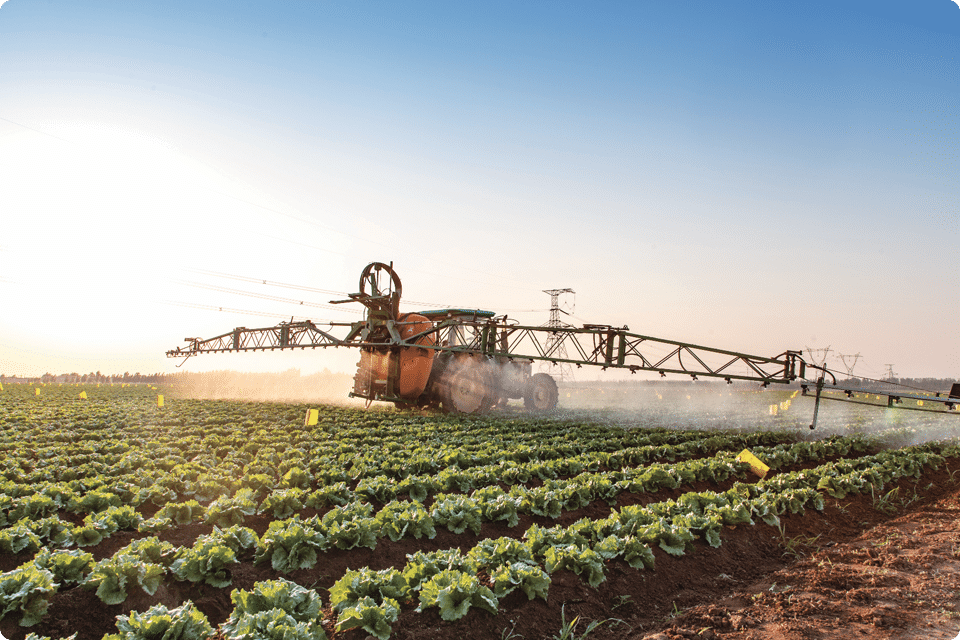
We uphold our commitment to food safety starting from the source by requiring our suppliers to establish strict upstream supplier approval processes and monitoring mechanisms. Examples include continuous oversight of broiler chicken breeding and the implementation of Yum China Good Agricultural Practices (Yum China GAP) for fruit and vegetable suppliers. These measures
enable us to holistically assess and control potential food safety risks.
In addition, we closely track policy and industry developments in areas such as Genetically Modified Organisms (GMOs), animal welfare, and veterinary drug management, enabling dynamic risk monitoring and targeted control measures. We also share industry best practices with upstream suppliers to elevate overall food safety and quality standards.
Our Yum China GAP has achieved 100% coverage in letture, tomato and pepper*, lemon and sweet corn bases as of the end of 2025.
*Tomato and pepper bases produce mainly tomatoes, cherry
tomatoes, green peppers, cayenne peppers, and cucumbers.
Supplier Approval
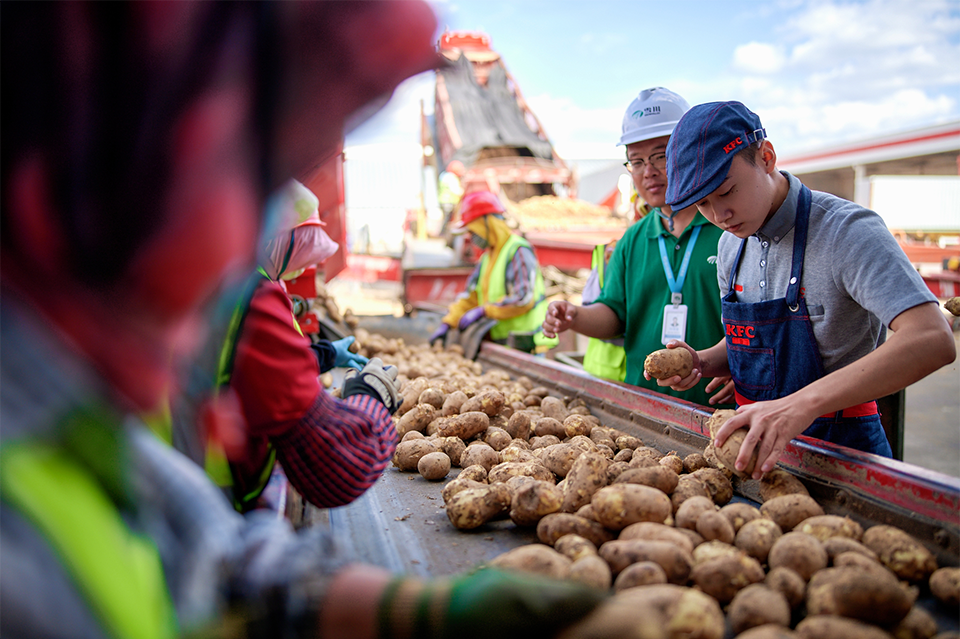
We have established a rigorous supplier approval mechanism that encompasses risk assessments, compliance reviews, and factory audits. It is mandatory for new suppliers to complete online training and pass the required assessments on the Yum China Quality Management Institute e-learning platform before approval.
Supplier Management
We also continue to advance the development of suppliers' food safety systems and capabilities, requiring food and food-contact packaging suppliers to obtain the food safety standard certifications endorsed by GFSI, such as BRCGS and FSSC 22000.
Furthermore, we empower suppliers to upgrade equipment and optimize processes via seminars and training. For instance, Yum China supported a supplier in equipment innovation, resulting in a new patent and enhanced food safety controls, productivity, and efficiency.
In 2025, 100% of our food ingredient and food-contact packaging suppliers obtained GFSI-benchmarked food safety certifications. Yum China conducted 300+ supplier food safety and quality audits and 3,600+ sampling tests completed for food safety and quality in raw materials.
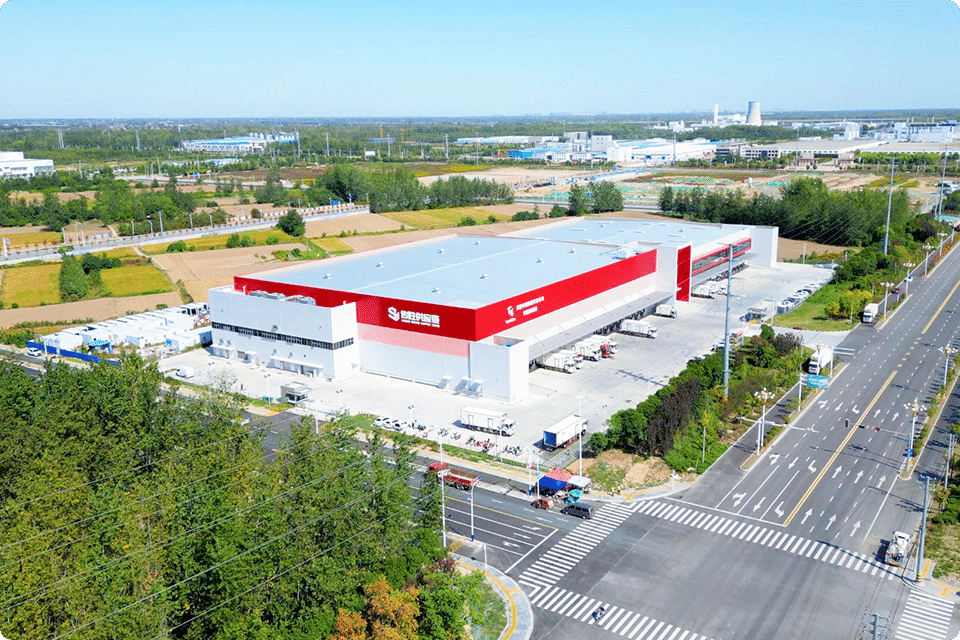
With an unwavering commitment to food safety, Yum China has established a world-class supply chain management system. From storage to in-transit
transportation, every stage of the supply chain is managed by stringent operational standards and requirements, ensuring the safety and quality of food
products throughout the entire process. Smart temperature control systems are deployed to prevent quality issues that could be caused by fluctuations
in temperature or humidity. With intelligent remote management combined with CCTV monitoring, we ensure standardized logistics operations in restaurants and full visibility and traceability in logistics management.
As of the end of 2025, our logistics network has included 34 logistics centers with capacity to cover 5,000+ towns and cities nationwide. We
also continuously enhance service quality by standardizing warehouse management practices.
In 2025, 5 company-owned logistics centers obtained BRCGS certification, and 160+ food safety and quality audits were conducted, covering all logistics centers, for warehousing and transportation service providers, effectively safeguarding food safety across the logistics process.
Audits and Inspections:
FSQNR Team conducts regular unannounced Operational Excellence Compliance (OEC) Audits on all restaurants, covering food safety,
product quality, and customer service to ensure full compliance with established food quality and safety standards at every stage
before the food is served to our customers. We also conduct regular quality assessments of microbiological sampling and testing of
food utensils, tableware, water, ice, and related products to help ensure compliance.
Restaurant Operations Management:
Yum China has established industry-leading restaurant operating standards and procedures covering raw material receiving, storage,
thawing and cooking, shelf-life management, personal hygiene, and utensil and equipment cleaning and disinfection. These help ensure
that all our restaurants implement consistent food safety standards and provide food with consistent quality and taste. We conduct
annual risk assessments at our restaurants to identify potential food safety and quality risks and take effective measures to mitigate
risks and eliminate hazards. We also conduct risk assessments for new products, new restaurant layouts, equipment, and store operations
to help ensure compliance with food safety and quality requirements.
Delivery Management:
We have established industry-leading operation standards and protocols, requiring all third-party delivery partners to sign and strictly
adhere to a letter of commitment on the food safety and quality practices for food delivery. The letter outlines specific requirements
for regulatory compliance, staff management, catering, delivery facilities, equipment as well as rigorous management of third-party
platforms, to ensure the implementation of food safety operation procedures.
In 2025, 100% OEC audit coverage was achieved for our restaurants nationwide. We conducted 9,200+ product quality assessments for ~600 new or upgraded items launched.

 Trending Issues

Food Safety Management of Franchisees
To support the Company's franchise expansion strategy, we implement the "One System" principle, applying consistent food safety and quality management systems, standards, and digital platforms to both franchise and company-owned restaurants. This approach covers the entire spectrum of franchisee operations, including the franchisee admission assessment, new store openings, daily operations, performance assessments, and exit mechanisms. Through this approach, we continuously strengthen franchisees' accountability for food safety and awareness of compliance. Through ongoing on-site supervision, training and full-cycle support, we steadily enhance the management capabilities of our franchisees. We rigorously evaluate franchisee candidates based on multiple performance indicators, including financial strength, operational capabilities, and corporate values, among other criteria, to ensure alignment with our brands' high standards and a shared commitment to food safety and quality.
One System Principle—Applies to both Franchise and Company-owned Restaurants

Franchisee Food Safety and Quality Management Measures

Leverage Technology to Ensure Food Safety
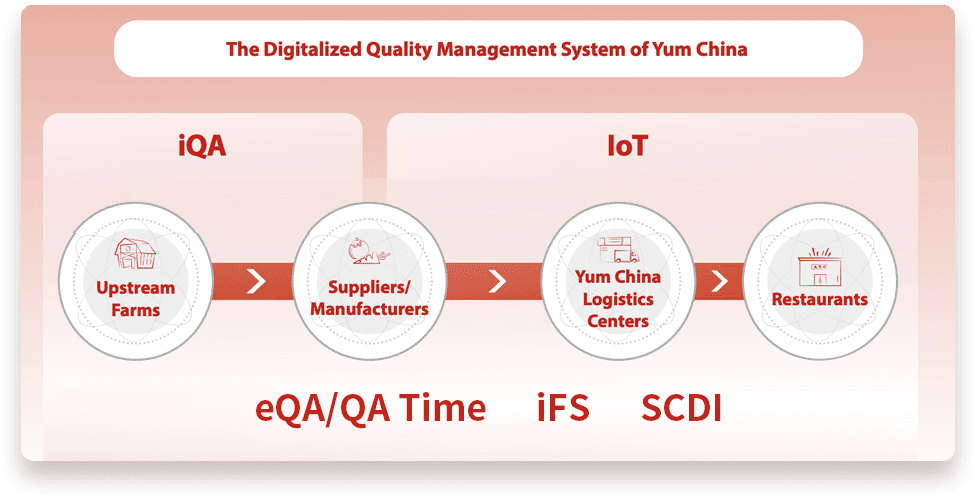
Yum China's robust digital capabilities are unlocking new possibilities for
comprehensive food quality and safety management across the entire value chain.
We are actively exploring the extensive application of advanced digital and
intelligent technologies to build an industry-leading digital supply chain,
driving transformation in food safety governance.
1. Precise and Timely Food Safety Risk Prevention and Control
Leveraging over 30 years of expertise in food safety and quality management,
Yum China has developed an interconnected food safety big data ecosystem. Since 2020,
we have deployed a Food Safety Risk Assessment and Early Warning Management System
that utilizes cutting-edge machine learning and deep learning technologies and
algorithms such as knowledge graph and natural language processing (NLP).
Through four years of continuous research and development, and iterative upgrades,
the system now integrates eight functional modules, such as risk warning and risk assessment,
with sustained performance optimization across all modules.
2. Strict Food Traceability and In-Transit Supervision
We continuously implement our IoT Cold Chain Monitoring System to ensure effective
food safety management throughout our logistics operations. During the reporting period,
we extended the practice to include real-time monitoring of inbound logistics transportation
managed by raw material suppliers. We are also actively exploring the substitution and
assistance of Artificial Intelligence-Generated Content (AIGC) in manual monitoring processes.
These advancements are enabling efficient supply chain management, enhanced food traceability
and improved in-transit supervision.

 Learn More


