

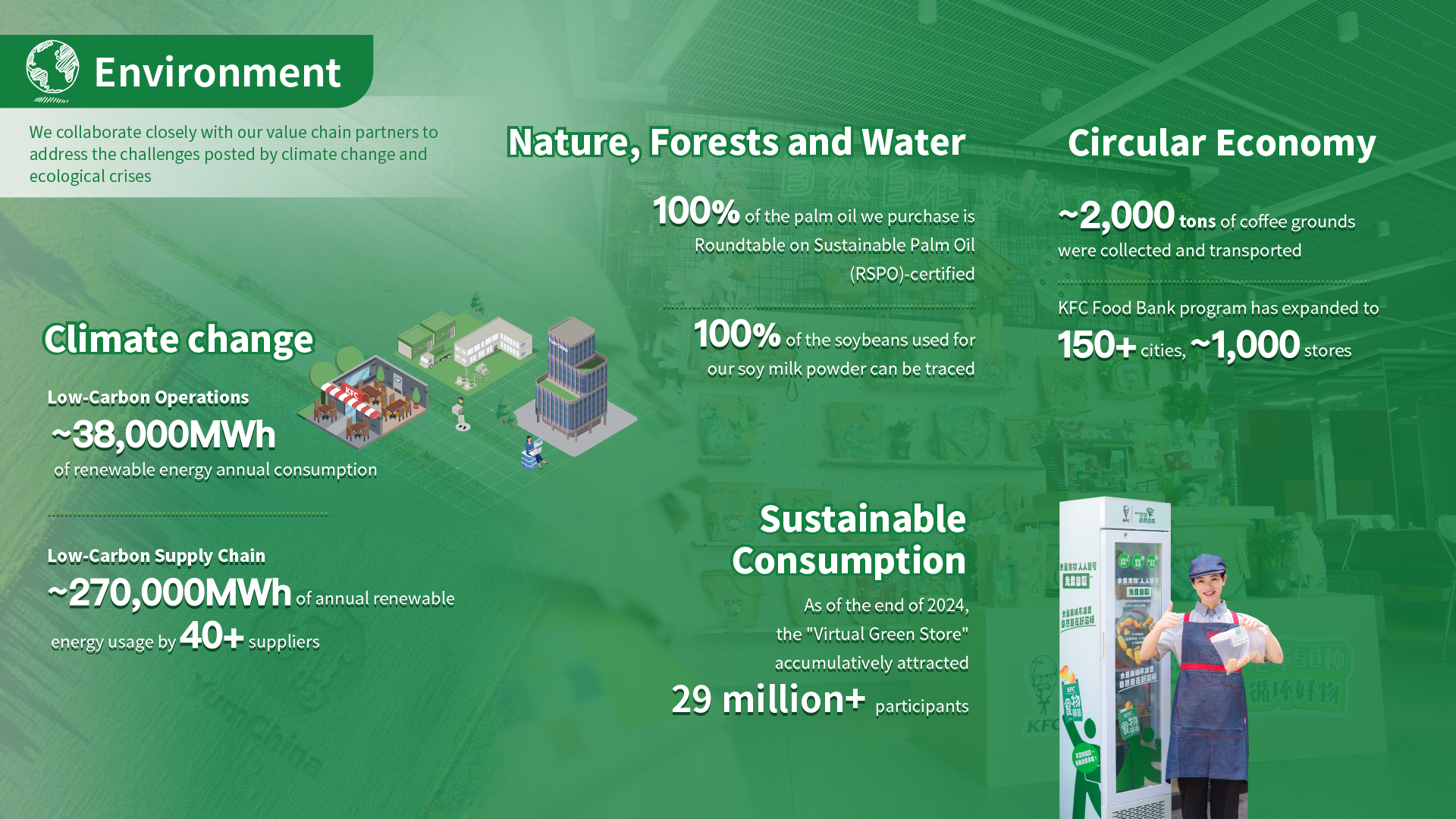


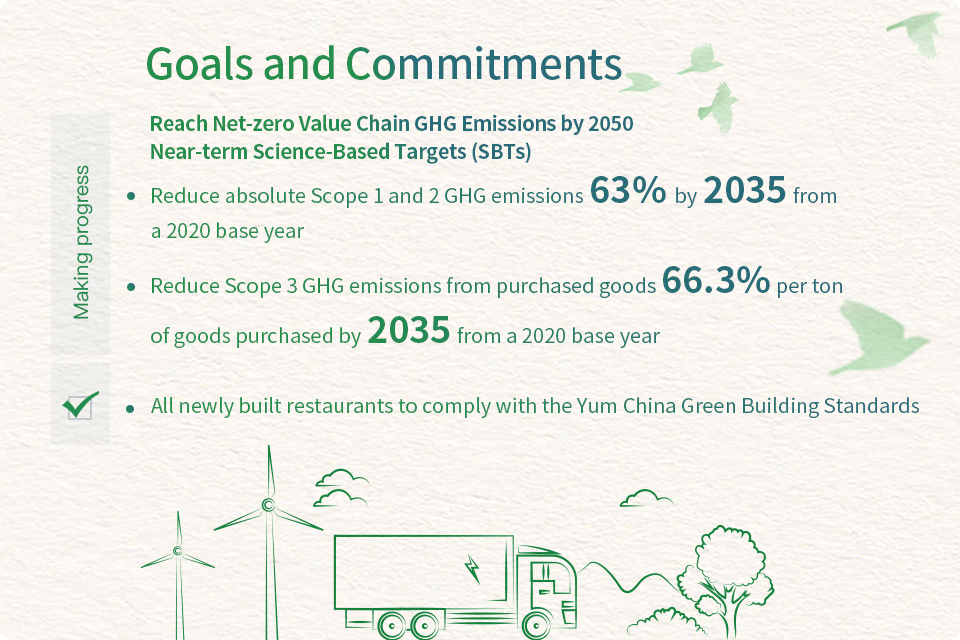
In 2021, Yum China conducted its initial climate-related risks and opportunities assessment. Based on the assessment results and supported by a robust climate governance framework, we have integrated climate strategy and risk management into day-to-day business operations. We are committed to building climate resilience and promoting sustainable development. In 2025, we further aligned with HKEX's ESG Reporting Code Part D: Climate-related Disclosures .Drawing on the macro environment, industry practices, and our own strategic plans, we identified our most material climate-related risks and opportunities based on relevance and materiality. Meanwhile, in alignment with the climate-related disclosure standards, we analyzed the potential current and future impacts of these risks and opportunities under different climate scenarios and time horizons, enabling us to develop and implement targeted and phased response measures.
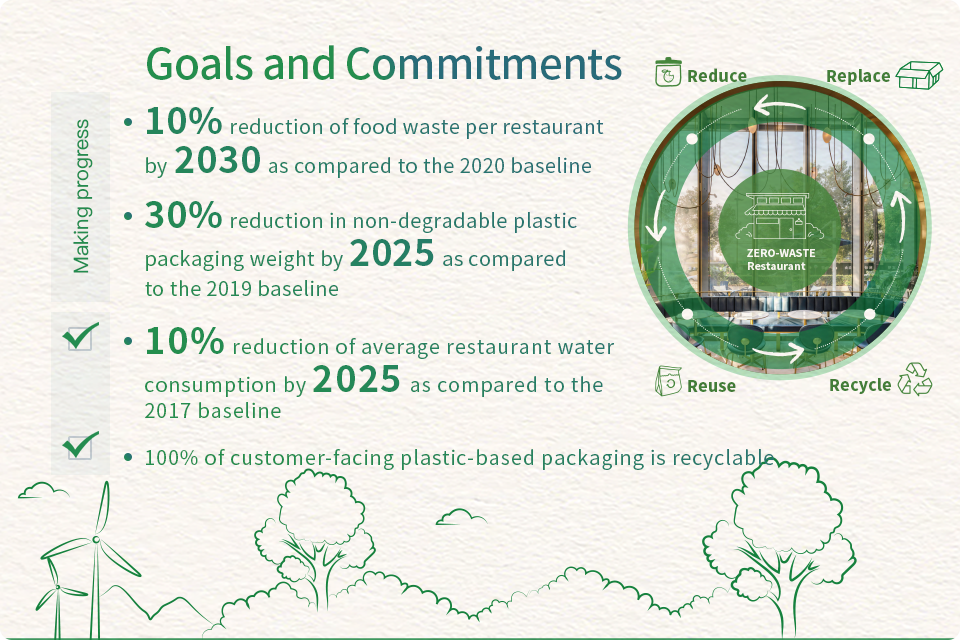
Yum China adheres to the 4R principles to build a comprehensive resource circular system that starts with source reduction and extends to end-of-life regeneration and recovery. We continuously explore innovative circular economy models tailored to the restaurant industry.
Our strategy and targets focus on three key areas: sustainable packaging, food loss and waste, and waste management. Through end-to-end resource optimization and advanced circular regeneration technologies, we maximize resource
efficiency while partnering with stakeholders to build a resource-efficient, environmentally responsible industry ecosystem.
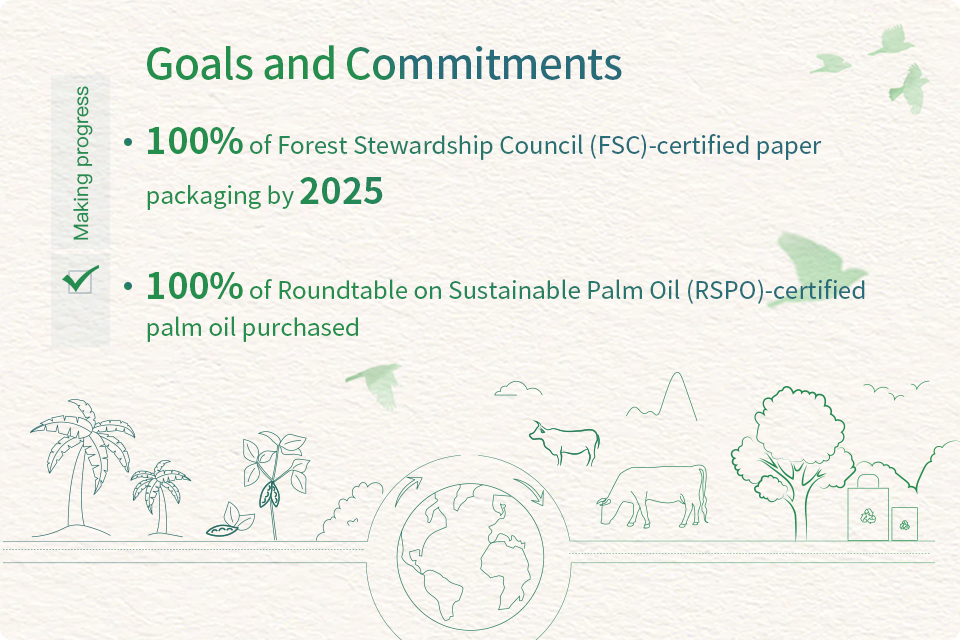
Yum China is committed to building a "Zero Deforestation Supply Chain." We have released the Yum China Biodiversity Commitment and the Yum China No Deforestation Commitment to further reinforce our upstream supply chain's traceability as well as to proactively identify and assess potential environmental risks. Through these efforts, we are dedicated to minimizing negative impacts on nature.