

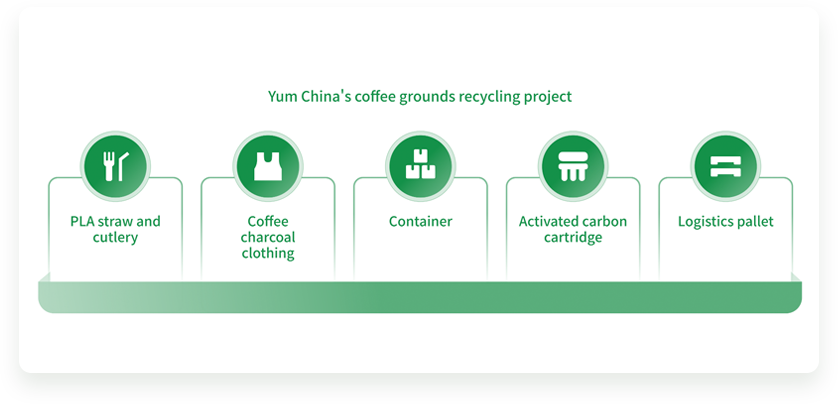
To efficiently process coffee grounds, we are dedicated to establishing an efficient recycling and treatment system that spans from front-end collection in our restaurants to back-end resource Coffee Grounds conversion. We have launched coffee grounds recycling initiatives across KFC restaurants nationwide and constructed coffee grounds disposal centers to transform collected coffee grounds into valuable resources.
Building upon our established recycling system, we are actively exploring innovative applications for coffee grounds across various fields to commercialize them into value-added products. In 2025, Yum China made significant progress in coffee grounds resource utilization. We supported partners in completing the construction of coffee grounds pre-treatment facilities and simultaneously launched R&D for end-use products. As of the end of 2025, we have introduced ~25,000 plastic logistics pallets containing recycled coffee grounds into our Nanxiang Logistics Center, accounting for ~70% of the pallets used at that facility. This initiative not only enhanced resource circularity but also delivered cost savings for the Company. Through collaborative innovation across the value chain, we developed coffee grounds applications across a variety of end-use categories.
In active response to China's national dual carbon strategy and the drive to promote resource utilization of agricultural and forestry waste, Yum China has been exploring high-value applications for coffee grounds beyond their use as filler material. In 2025, in collaboration with partners across the value chain, we successfully developed an innovative solution of converting coffee grounds into plant-based fulvic acid.
We further promoted its application in commercial potato cultivation for testing, aiming to partially replace chemical fertilizers. This initiative not only reduces environmental impact but also increases potato yields. At the same time, we coordinated with potato suppliers to source these potatoes for production, preliminarily establishing a sustainable closed-loop model of "restaurant waste—resource recovery—eco-agriculture— closed-loop application (French fries) ". Moving forward, Yum China will continue to deepen collaboration with industry chain partners and systematically advance the application of coffee ground-derived fulvic acid in upstream crop cultivation and the development of related production capacity. This effort aims to set a practical example for building a circular economy model in the restaurant industry

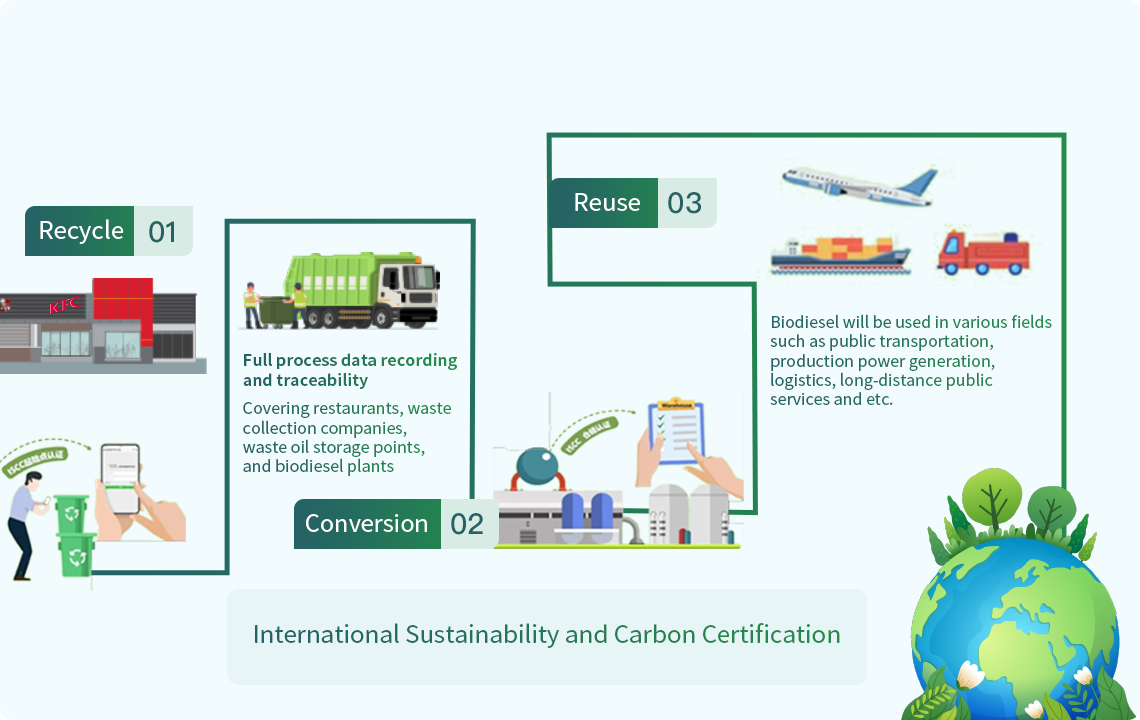
To address the environmental challenges posed by waste cooking oil in the restaurant sector, Yum China continues to promote its resource recovery and valorization. Since 2019, we have progressively expanded pilot programs converting used cooking oil into biodiesel and actively explored higher-value applications such as sustainable aviation fuel (SAF) and marine fuel, thereby increasing the circular value of this waste stream. To support the development of the national biofuel supply chain, we continued to participate in the B10 vehicle biodiesel pilot project in Beijing led by the China National Energy Administration, using UCO collected from KFC and Pizza Hut restaurants. Throughout 2025, we maintained standardized collection and resource recovery of used cooking oil. A portion was converted into biodiesel, while the remainder was used to produce lubricants, industrial oils, and other products. This mature model is now being gradually rolled out to more provinces, further amplifying the environmental benefits and demonstration effect of the program.